Teaching kindness: life lessons kids learn at school go far beyond academics, shaping character in ways that ripple through families, communities, and future workplaces. For parents exploring the top kids schools in Greater Noida, these values can be just as important as academic performance. While reading, writing, and arithmetic fill the timetable, the real curriculum often unfolds in hallways, playgrounds, and lunch lines—where children practice empathy, patience, and courage in small, everyday moments. This blog explores how schools become living laboratories for compassion, and why these lessons matter more than ever.
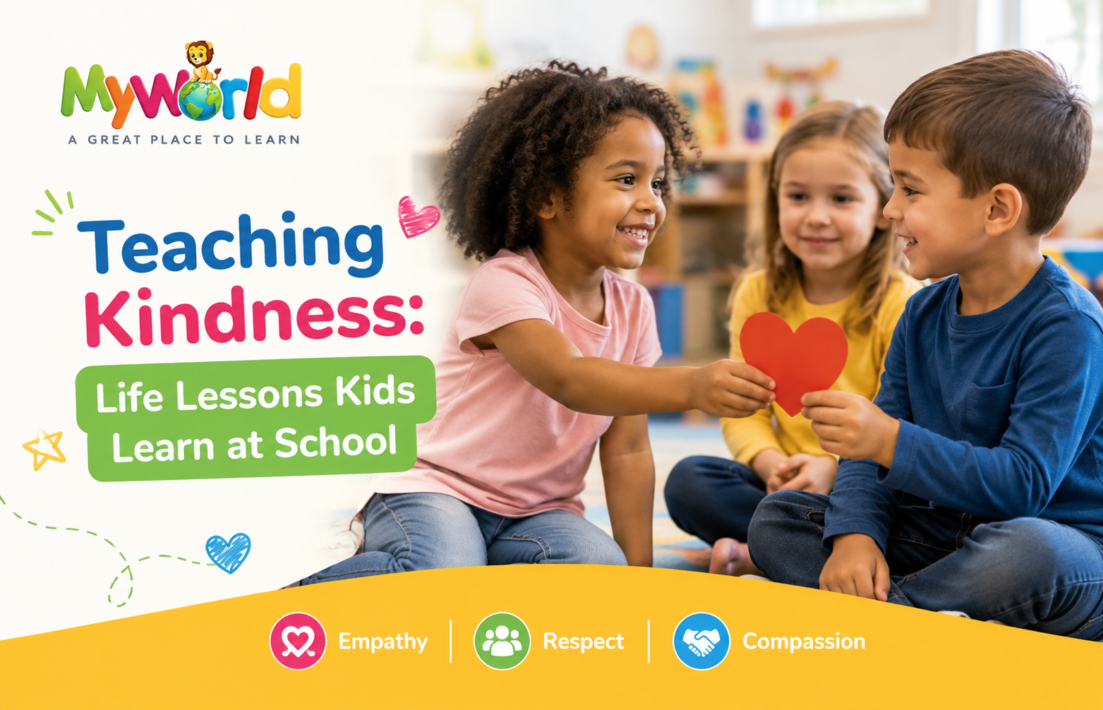
At home, children are loved unconditionally. At school, they meet peers with different backgrounds, temperaments, and needs. That diversity is the raw material for teaching kindness: life lessons kids learn at school through trial, error, and reflection. When a child shares a crayon, comforts a crying classmate, or includes a lonely newcomer in a game, they aren’t just being “nice”—they are building neural pathways for social reasoning, emotional regulation, and moral identity. Teachers and staff reinforce these moments with intentional practices like morning meetings, buddy systems, and restorative circles, turning accidental good deeds into deliberate character growth.
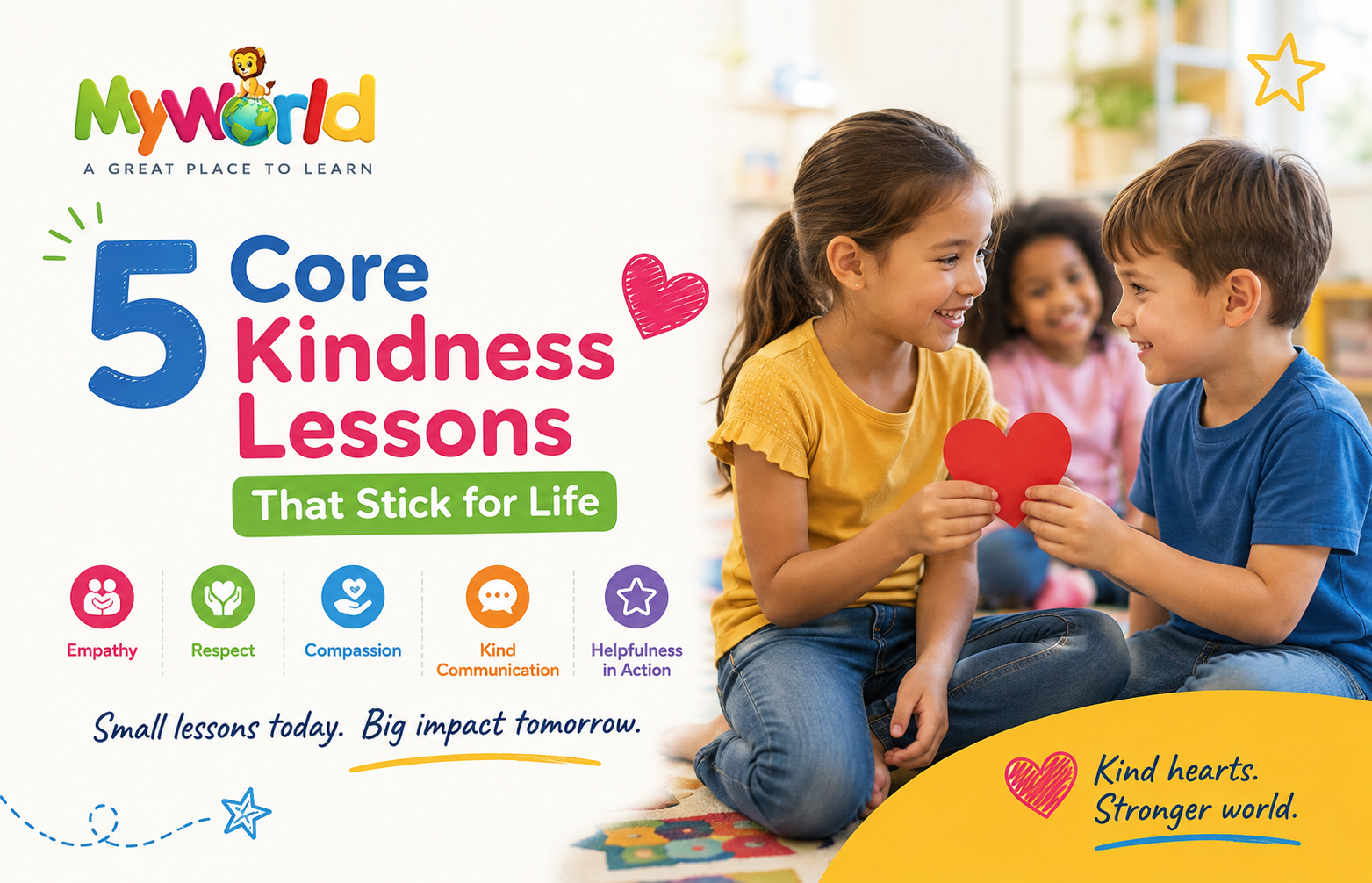
Kids discover that kindness isn’t about fixing problems—it’s about hearing someone’s feelings without judgment. Role-play activities and pair-sharing exercises teach them to pause, make eye contact, and ask, “How are you, really?”
Standing up for a bullied peer or inviting someone to sit with you at lunch requires guts. Schools reward this bravery through peer-nominated awards and class discussions, showing that true kindness often means going against the crowd.
Saying “sorry” is easy; changing behaviour is hard. When students practise restitution—like helping rebuild a knocked-over project or writing a thoughtful note—they learn that kindness includes repairing trust.
Many schools now run “gratitude grams” or appreciation walls. When children regularly voice what they appreciate about others, they shift from a scarcity mindset (“what can I get?”) to an abundance mindset (“what can I give?”).
Kids can’t pour from an empty cup. Mindfulness breaks, self-compassion journals, and “mistake-friendly” classrooms teach them that kindness starts with forgiving their own stumbles—so they can extend that grace to others.
These strategies don’t add extra work—they transform existing activities into kindness laboratories.
When children internalise teaching kindness: life lessons kids learn at school, they carry that muscle memory home. At a Best preschool in Greater Noida, these early lessons can help children develop empathy, cooperation, and positive social habits from a young age. Parents report siblings arguing less, more spontaneous help with chores, and deeper conversations about feelings. In the long term, these students become employees who listen, leaders who include, and neighbours who volunteer. Research from the Harvard Graduate School of Education confirms that schools prioritising social-emotional learning see higher test scores, lower suspension rates, and better mental health outcomes—proof that kindness isn’t soft; it’s strategic.
Ask your child tonight: “What was one kind thing someone did for you today, and one kind thing you did for someone else?” Then share your own answer. This two-minute ritual reinforces that kindness is not a school subject—it’s a lifelong practice. And when schools and homes speak the same language of compassion, children learn that teaching kindness: life lessons kids learn at school are really life lessons for all of us.